Wednesday, 18 November 2020

Monday, 9 November 2020
Stonechat at Happisburgh confirmed as Siberian Stonechat (Stejneger's)
You may recall from earlier blog posts that Nick and I found an interesting Stonechat in early October at Cart Gap that looked a strong candidate for 'Stejnegeri' (see A day to remember and Follow-up Chat).
Fair play to Richard Moores who refound the bird the following Monday and obtained a faecal sample. This has now been analysed and the results have confirmed the bird as Siberian Stonechat (Stejneger's), the 2nd confirmed record for Norfolk.
There's some excellent shots of the bird on Birding World by Steve Gantlett plus a large selection of shots of 'Siberian' Stonechats seen in Norfolk and other localities in the UK. Given that the Salthouse bird and now this one have both been identified as 'Stejnegeri' then this may start to provide birders with enough information to reliably identify one in the field without needing genetic analysis.
I saw the Salthouse bird in 2018 which was confirmed, through genetic analysis, to be 'Stejnegeri'. This was the first confirmed record for Norfolk. I forgot I had a photo of it until I trawled through my files.
 |
| Siberian 'Stejnegers' Stonechat - Salthouse, Norfolk - November 2018 |
I also saw the very dapper Siberian Stonechat at Caister on Sea in 2015, however this was never assigned to either form maura or stejnegeri.

 |
| Siberian Stonechat, Caister-on-Sea, Norfolk - November 2015 |
Nocmig Update
No sooner had I finished my mid-October week off when the east winds swung around to the west and the autumn seemed to stop dead in its tracks. Perfect timing considering I was back at work! However, the change in wind direction brought wet and very breezy weather. No good for 'nocmigging'. I recorded on Saturday 17th October (when I had what may be Spotted Redshank, I'm struggling to think what else it could be) but otherwise that was it for the rest of October.
However, in the first week of November the weather cleared up a bit and there were a number of calm and dry nights where I was able to record.
Wednesday the 4th November was especially good. I'd only just put my parabola out when a Tawny Owl started hooting from the back of the garden. I know they are common birds in the UK but the sound is so evocative to me and this bird was so close.
Later the same night I had a Barn Owl once again (first time was last September), considering I'm in a built-up suburban area, this is still a surprise to me.
Redwing passage was steady all night, plus Blackbirds and the odd Song Thrush. I kept the recorder going after dawn and picked up Redpoll, Brambling and Crossbill.
Over the course of the next few nights I continued to record. Redwing, Blackbird and Song Thrush movements continued steadily. Plus I managed to record Fieldfare too.
Dunlin were recorded three nights in a row including this close sounding fly-past.
Pink-footed Geese also put in an appearance.
Thursday, 22 October 2020
East Winds - part two!
After three early starts and lots of walking, I decided Saturday would be a rest day and I would be raring to go Sunday before heading back to work.
However, things didn't quite go to plan. I was busy doing chores on Saturday morning when a message on the Norwich Birders WhatsApp group said "Rufous Bush Chat at Stiffkey". Now that's a bird and a half! One of my favourite species. However, and there will be a lot of birders who won't understand this, but my first reaction was 'I'm not going to bother going for that'! I'm not much of a twitcher and my immediate thought was 'that'll be one hell of a shitshow'. I could see it already, large crowds of birders (in a pandemic), parking problems, pissed off locals, birders accusing 'toggers', 'toggers' accusing birders, a lost, hungry bird being pushed around by the crowd. Not how I want to do my birding and not how I want to see a bird.
I tried to press on with my chores and 'stuff' but I was distracted now and I was relieved when I got a message from James Appleton to say he had found a Pallas's Warbler in the churchyard at Happisburgh. I gathered my gear up and headed out.
Suffice to say I didn't see the Pallas's. I walked from the cricket club to coast watch and en route I bumped into James who had just found a tail-pumping Pipit. He was pretty sure it was just a Tree Pipit and his 'back of the camera' shots did look like Tree Pipit (albeit the head / face pattern wasn't visible in the shots), raspberry legs and fine flank streaks. We searched for the bird and I flushed a pipit which called briefly (sounding very like Tree Pipit), alighted on a telegraph wire and then dropped down and out of sight before I could see it either through bins or take a photo. We couldn't relocate it but seemed to have resolved ourselves into taking it as Tree Pipit, although I did think it was late for that species.
That evening James processed the shots and sent me photos of what was certainly an Olive-backed Pipit. D'oh!!
I looked the next morning as did James but it was gone. Double d'oh.
But I was out in the field now, there wasn't much else happening so I bit the bullet and drove to Stiffkey. And you know what...............it wasn't all that bad. I got parked without too much trouble (although all those sensors and cameras on my car did assist). I donned my wellies and face -mask and marched out across the salt marsh to where the crowd was assembled.
 |
| Birders on Stiffkey saltmarsh |
I found a reasonable gap that allowed me to maintain social distance and waited for the bird to show. A minute later (yes, just one minute), the bird popped up on the sueda on the opposite side of the channel from where I stood and posed for a minute before flitting off. I cursed myself for not bringing my big lens whilst I fired off a few frames. Job done! I watched the bird for a short while longer before beating a retreat back to my car for lunch.


 |
| Eastern Rufous Bush Robin - Stiffkey, Norfolk - 18th October 2020 |
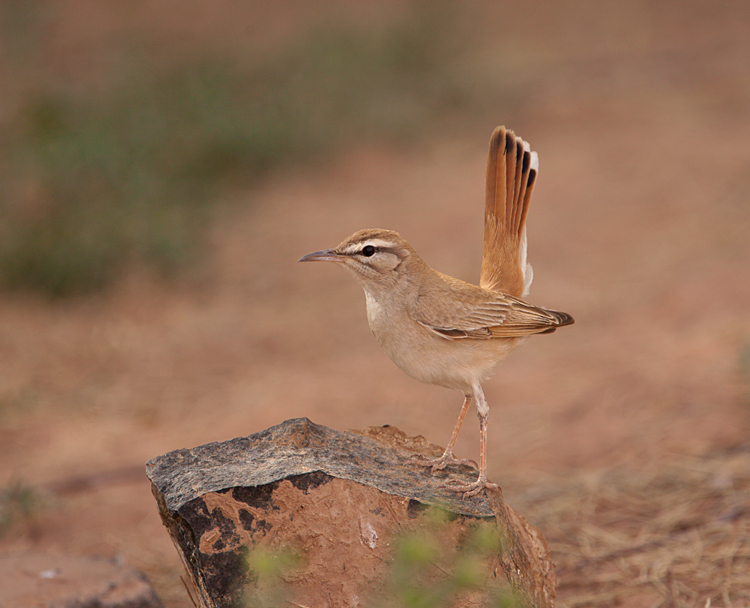
The bird is supposedly one of the eastern races familiaris or syriaca (I suppose I may have seen syriaca in Kuwait?) which is duller than the nominate race galactotes (which I saw in Morocco - see images below).

 |
| Rufous Bush Robin (galactotes), Morocco - May 2013 |
Truth be told it was a bit scruffy looking (certainly compared to the above specimen) but despite that it has survived as far as Wednesday 21st October, lets hope it continues to do so. An extradinary find and all said, I'm glad I saw it. Birders were well-behaved and the whole thing wasn't anything like the fiasco I expected it to be.
East winds - part one!
I was off for all of last week and although my trip to Cape Clear Island had been cancelled due to Covid, it was starting to look like staying in Norfolk all week might not be so bad. On Monday and Tuesday I added some brownie points into the bag but from Wednesday onwards, just as the wind started to blow from deep in the east, I went birding!
The first day I focused my attention mainly around the Happisburgh area. Birding around the village of Happisburgh and up as far as Walcott and down as far as Cart Gap. In the morning there were good numbers of grounded Redwing, Fieldfares, Blackbirds with some Robins and Chaffinches, though numbers thinned out as the morning wore on. In the afternoon I picked up a smart male Ring Ouzel between Cart Gap and Happisburgh Lighthouse. I finished the day at Waxham hoping to see the Pallas's Warbler that had been found just north of the Shangri-La Cottage and although it was present I found it very tricky to see in amongst the ivy-clad sycamores. However, a pair of Black Redstarts at Waxham church were a nice conclusion to the day especially the dapper looking male.
 |
| Female Black Redstart, Waxham Church, Norfolk - 14th October 2020 |

 |
| Male Black Redstart, Waxham Church, Norfolk - 14th October 2020 |
I started Thursday morning again at Happisburgh but apart from two fly-over Brambling at the Cricket Club plus a Short-eared Owl that appeared to come in off the sea near the Coast watch, it was a bit quiet. After I'd left Waxham the previous evening, a Red-flanked Bluetail had been found near the pipedump. In fact as the week progressed there were (I think) at least ten Bluetails in Norfolk alone including four birds at Holme. Anyway, being nearly eight years since I saw my one and only Bluetail, I decided it was time to see another. I headed over to Waxham and enjoyed great views of the bird as it fed along the fence line between the Shangri-La and the pipe dump.


 |
| Red-flanked Bluetail, Waxham - 15th October 2020 |
I had the briefest of views afterwards of the Pallas's Warbler plus another Short-eared Owl and both Black Redstarts were still present in the churchyard.
On Friday, I walked from Horsey Gap car park to the plantation at Winterton but just managed four Brambling. However, Goldcrest numbers were impressive with many looking like they had literally just made landfall as they flitted around the marram grass at the top of the sand dunes. (By the way, I love their alternative moniker 'Woodcock Pilots', in my mind I can see them safely guiding migrating Woodcock on dark autumn nights. Very evocative!).
 |
| Goldcrest, Winterton Plantation, Norfolk - 16th October 2020 |
On the way back I had a nice female Black Redstart at the pillbox just south of the car park.
 |
| Female Black Redstart, Horsey Gap, Norfolk - 16th October 2020 |
In the afternoon I chased after a Red-throated Pipit at Sea Palling (without success). The best I could muster was one more Brambling and two more Short-eared Owls that appeared to come in off the sea somewhere between Cart Gap and Happisburgh.
 |
| Distant cropped shot of two Short-eared Owls, Happisburgh / Cart Gap, Norfolk - 16th October 2020 |
Monday, 19 October 2020
Friday, 9 October 2020
Herr Schwarzi
Well I was supposed to be en route to Cape Clear Island, Cork for my annual autumn birding holiday but sadly Covid has taken care of that. It never really looked likely though, so it seemed appropriate to be seeing a bird today that I last saw in Cork (specifically in 2007 on the Old Head of Kinsale). That bird being Radde's Warbler. The species is named after one Gustav Radde who accompanied Professor Ludwig Schwarz on the East Siberian Expedition of 1855. Radde's Warbler's scientific name is Phylloscopus Schwarzi.
Mid-morning I drove down to the charming town of Southwold on the Suffolk coast. When I arrived the bird had been missing for at least an hour. The wind had picked up and although this bird had been showing well, the species is notoriously skulking so I was starting to worry a little. My views of the bird in Cork were just about tickable so I really hoped for better. And I wasn't to be disappointed. As is often the case, just wait patiently. I positioned myself close to where it had first been seen and set up my camera up on the tripod. After an hour the bird passed my way and fed down low at the base of a small Tamarisk. A small group enjoyed excellent views down to within twenty feet for about a minute before it moved on.

And as it moved on, in case we were in any doubt as to its identification, it gave us all a quick flash of its arse, showing that apricot vent to full effect.

I hung around for another hour, I had one shot that was tantalisingly close to being as good as you could hope for in this species but a frond just blocked the head.....how cruel!
 |
| Radde's Warbler, Southwold, Suffolk - 9th October 2020 |
Back at the carpark another birder told me of a rather obliging Purple Sandpiper at the end of the pier. He wasn't wrong there.

Purple Sandpiper, Southwold, Suffolk - 9th October 2020
Time was running out and I needed to get back, but another birder got me onto this striking looking 1st Winter Caspian Gull. A very upright, long-legged and long-necked Gull and well worth a good look.
 |
| 1st Winter Caspian Gull - Southwold, Suffolk - 9th October 2020 |
Subscribe to:
Posts (Atom)