Friday, 22 November 2019

Kuwait - Part 8

The final day of our trip started with a return visit to the excellent Liyah reserve. The weather was thankfully cooler than previous days with a spot of rain too. Migrants were plentiful with a decent sized flock of Ortolan Buntings, a lifer in Eastern Orphean Warbler, lots of Blackcaps, Willow Warblers (which were now clearly on the move), a lot more female Common Redstarts, yet more White-throated Robins and a single Roller.
I spent the time there trying to get shots of this beautiful Isabelline Shrike. It was very busy hunting lizards and doing pretty well in the process.


Isabelline Shrike, Liyah Reserve, Kuwait

From Liyah we were city bound once more stopping at Green Island for Red-vented Bulbul.

Red-vented Bulbul agaist the Kuwait City skyline

We also had Tree Pipit, Redstart and plenty of Willow Warblers there too.
We birded several different spots around Doha Spit where we had Terek Sandpipers, Ruff, Common and Marsh Sandpipers, Little Stint, Whimbrel, Lesser Sand Plover, Grey Plover, Ringed Plover and Kentish Ploverand Dunlin.  We also had this rather brutish looking Steppe Gull.

Steppe Gull, Doha Spit - Kuwait
We did a quick tour around a nearby business park for Indian House Crow - reminding me of the one that took up residence in Cobh, Cork around 10 years ago!
Our last stop of the trip was right back where we started at Jahra Farms. The Wryneck that was present on the first day was still in the same spot. We had a small mixed flock of Yellow Wagtails (Beema, Lutea and Thunbergi), lots of Willows Warblers and an obliging male Redstart to finish the trip (what else of course!).

 
Male Redstart - the final bird of the trip and is still my favourite of all species anywhere!


Kuwait - Part 7

Our penultimate day started with a drive northwards from Kuwait City to Budai Farm, Al Jahrah, to search for Afgan Babbler. We managed to find several birds and enjoyed decent views but I was more interested in the fact that we were only 5 kilometers or so from the Iraqi border.

From there we drove back to the Liyah Reserve and drove along some tracks checking the Acacias for migrants - of which there were quite a few. By now there were some female Common Redstarts starting to move through, also male and female White-throated Robins, Common and Lesser Whitethroats, Rufous Scrub Robin and a single Hume's Whitethroat that was sadly carrying an injured wing. With hunters in the area this was no doubt a result of gun-shot.

Hume's Whitethroat - sadly carrying a injured wing


White-throated Robin - Liyah Reserve, Kuwait

White-throated Robin - Liyah Reserve, Kuwait.


After a quick stop for lunch I walked around the Acacias on foot myself. I had several more Redstarts, Blackcaps and a Spotted Flycatcher. Sadly though I wasn't alone and this individual in his SUV was driving around the Acacias taking pot-shots at the birds with his rifle. He had a little bag that was no doubt filled with dead Redstarts, Blackcaps and whatever else. What he does with these at the end of the day is anyone's guess but possibly they just get tossed in the bin. It's a hard thing to see and a completely pointless and callous pursuit - a sad and pitiful man!

'Hunter' climbing out of his SUV to pick up whatever he'd just blasted out of the nearby Acacia!
 
The one and only Spot Fly of the trip - mercifully dodging the gun-shots!
We completed the day at
Mutla'a ranch where we had Masked Shrike, Turkestan Shrike, Namaqua Dove and Roller. However  I manged to lose track of time and of my fellow birders and got locked behind a gate - I needed Nick and Paul to assist with my exit.


That evening back in Kuwait City I decided after 7 days of city and desert birding that I needed a bit of a clean-up and went for the full Kuwaiti shaving experience.


*Much to my delight Common Redstarts were far and away the commonest migrant of the trip as it happens!

Kuwait - Part 6

The day started with a visit to the Kabd Reserve to search for Black-crowned Sparrow Lark. We failed to connect but did have White-throted Robin, more Common Redstarts, Ortolan Bunting and Turkestan Shrike. A dust-up with one of our travelling companions on the subject of fieldcraft left the atmosphere decidedly cool - the less said about that the better!

Driving around the reserve we found a female Rock Thrush, Isabelline Wheatear, Blue-cheeked Bee-eater and Eastern Olivaecous Warbler.

Isabelline Wheatear - Kapd Reserve, Kuwait


Turkestan Shrike, Kapd Reserve, Kuwait
Eastern Olivaceous Warbler - Kapd Reserve, Kuwait
From there we headed back into the city to search a local park where the Birdfinders group had earlier seen a Crested Honey Buzzard. Sadly we also failed to connect with this bird but did have Wryneck, yet more Redstarts and a female Semi-collared Flycatcher. In another city park we came across this Sylvia warbler which initially had us all stumped!

'Mystery' Sylvia
However, on examination of the shots I had taken from the back of my camera, Abdulrahman confirmed it was an eastern race (Icterops) of Common Whitethroat, a really grey / blueish looking bird. I'd not heard of this race and this turned out to be one of the most interesting encounters of the trip!
That afternoon we trudged around the Jahra Pools Reserve - I say trudged because it was above 40 celsius and I think we were all struggling a little. Nonetheless we added Graceful Prinia, White-tailed Lapwing, Spur-winged Plover, Heuglin's Gull, White Wagtail and Black-winged Stilt to the trip list.

Plus we had nice views of this male Rock Thrush perched in a dead tree.

Male Rock Thrush - Jahra Pools, Kuwait
And this smart Woodchat Shrike making it the 5th Shrike species of the trip after Turkestan, Isabelline, Great Grey (specifically Steppe Grey Shrike) and Masked Shrike.

Woodchat Shrike, Jahra Pools Reserve.

Monday, 21 October 2019

Kuwait - Part 5

Today was pelagic day. We had our usual 5.30am start. Nick did the long drive down to Al Khiran port where we were joined by four other Danish birders.
By the time we had breakfast and set sail from the quay it was gone 8am. However, it didn't take long before we met up with a mixed flock of feeding terns which consisted of Lesser Crested, Bridled and White-cheeked - the latter two being lifers!

Lesser Crested Tern

Lesser Crested Tern

Bridled Tern - happily floating along on his very own piece of wood :-)

Fly-by Bridled Tern

White-cheeked Tern
We made several detours around various marker buoys and platforms looking for more terns adding Greater Crested to our trip list in the process.
Abdulrahman had organised for us to stop-off on several small islands that were good for migrants. At the first one we ditched the boat up onto the beach and within a one hour walk-about on the island we encountered literally hundreds of Common Redstarts (though no Ehrenberg's amongst them - evidently they had already moved through). We also had Isabelline, Pied and Northern Wheatears and three species of Shrike (Turkestan, Woodchat and the one and only Steppe Grey Shrike of the trip).
The second island was even more exciting, aside from more Common Redstarts, Pied and Isabelline Wheatears. We had a superb male White-throated Robin, Hoopoe, a possible Hume's Whitethroat that we never quite nailed and bird of the trip (possibly) in a White-headed (leucocephala) Wagtail.


White-headed Yellow Wagtail
Time was getting on at this stage so we all needed to get back on the boat and head back to port. But lastly we needed to find Socotra Cormorant. Thankfully Abdulrahman knew where to look and we needed only a minor detour to catch up with this species. I can't say I was that excited by it but as I understand its difficult indeed to see the species anywhere else in the Western Palearctic so maybe someday I'll be glad I ticked it.

Socotra Cormorant - right hand bird with distinctive neck shape (left hand bird being Great Cormorant)
From there we headed back to port and back into Kuwait city where I wolfed down a quick meal in my hotel room before it was lights out!


Monday, 7 October 2019

Kuwait - Part 4

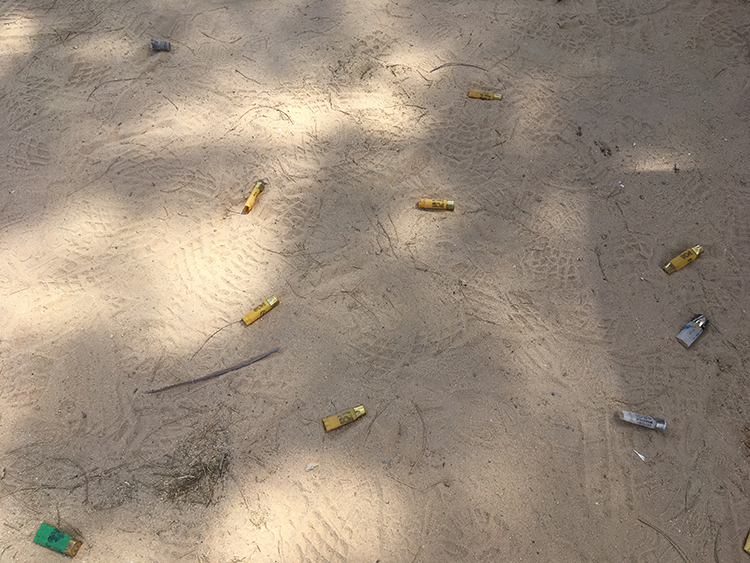
Our first stop of the day was the Abraq-Al-Habri oasis, which was about ninety minutes drive from Kuwait City. I was at the wheel for the day and was starting to drive like a local at this stage. On arrival at the oasis we had a flock of mixed Squacco Herons, Little and Cattle Egrets circling the farm buildings but sadly some trigger happy local was taking shots at them and it was likely that several perished. This was something we came across several times in Kuwait and its really an upsetting thing to see!

Didn't even bother to pick up the spent cartridges

Nick did a little tidy-up

Anyway, we had a quick breakfast before spreading out to search for migrants.

Breakfast time at Abraq Al-Habri

There were more Common Redstarts than you could shake a stick at and amongst those was this fine male Ehrenberg's Redstart.

Ehrenberg's Redstart - Abraq Al-Habri Oasis, Kuwait

Ehrenberg's Redstart - Abraq Al-Habri Oasis, Kuwait

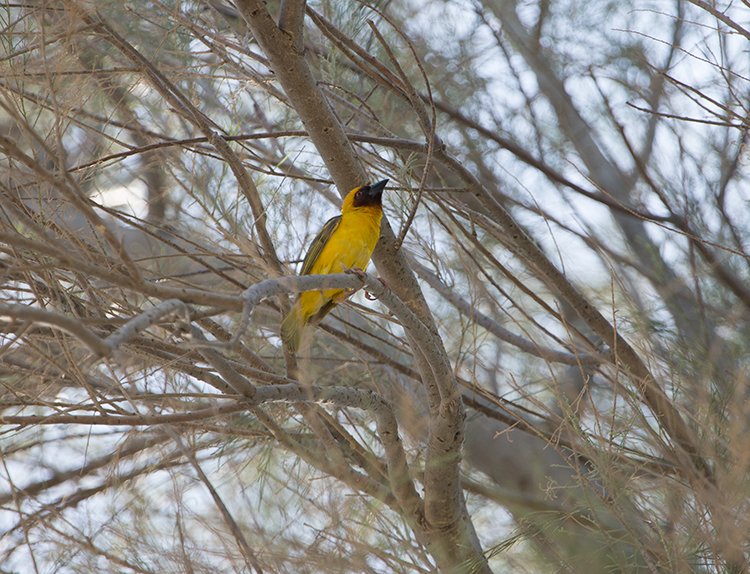
Also at Abraq Al-Habri we had Masked and Isabelline Shrike, White-throated Robin, Lesser Whitethroat, Eastern Olivaceous Warbler, Semi-collared Flycatcher, Ortolan Bunting, Pale Rock Sparrow and Hypocolius.


Masked Shrike

White-throated Robin - is there a prettier chat??
Hypocolius flock in flight
Cattle Egret - this one survived the gun


News reached us that Basra Reed Warbler and Cinerous Bunting were once again present in Al-Shaheed Park. So, we high-tailed it back to city - just in time for the rush hour!

Rushhour in downtown Kuwait City
This time our luck was in and Abdulrahman pinned down a very showy Basra Reed Warbler feeding on the deck - in my mind if I was ever to see this species it wasn't going to be in a city park!

Fly-catching from a rock - Basra Reed Warbler

Looking for his next victim

A classic pose in typical habitat ;-)
And a Great Reed Warbler kept company on the adjacent lawn.

Great Reed Warbler - also in a less than typical setting!
Great 'Lawn' Warbler

And this time our luck was also in with Cinerous Bunting.

Cinerous Bunting (semenowi)

Kuwait - Part 3

We reached the gates of Pivot Fields (a large agricultural complex) outside Kuwait City at 7.30am. Unfortunately 'The Major' wasn't present at the gate to let us in so we needed to drive around the back of the complex and peer over the fence (Footnote - we never did get to see 'The Major').

Anyway, we took breakfast as we scoped the agricultural fields watching a small group of Yellow Wagtails which had both Beema and Lutea subspecies mixed in - both new for me.
Later on within the complex we found a spot to look for raptors, we had male and female Pallid Harrier, a female Montagu's Harrier and a Steppe Buzzard there but it was otherwise it was quiet on the raptor front.


Montagu's Harrier

Our last stop in Pivot Fields was alongside some pools and a scrape where we had several Spotted Crakes (all peeping away), Little Bittern, Great Reed Warbler and Moustached Warbler. 

Little Bittern, Pivot Fields, Kuwait
On the scrape we had Collared Pratincole, Little and Temminck's Stints, Ringed Plover, Curlew and Wood Sandpiper, Common Snipe, Cattle Egret and a brief Ruppell's Weaver.

On the subject of Ruppell's Weaver - after that we headed back to the city to a spot called Fintas Park to look for Ruppell's Weaver. My recollection of this is that it was bloomin' hot - about 42 celsius and we all seemed to trudge around the place rather unenthusiastically but we did eventually see Ruppell's Weaver plus Masked Shrike, Eastern Oliveacous Warbler, Common Redstart and Blackcap.

Ruppell's Weaver - Fintas Park, Kuwait
Our final stop of the day was back once more at Al-Shaheed Park. We had 'gen' from other birders that had seen Basra Reed Warbler and Cinerous Bunting there earlier in the day. We searched but to no avail however we did have a pair of Little Bitterns, a female Pied Wheatear, Lesser Whitethroat, Tree Pipit, Great Reed Warbler, Pallid Swift and a Nightingale which I rather hoped would be of the golzi race but Abdulrahman said it was most likely from the race africans - which I confess I didn't even existed.

Male Little Bittern

Female Little Bittern

Tree Pipit on the carefully manicured lawns of Al-Shaheed Park

Africans race Nightingale