Wednesday, 18 September 2019

Kuwait - Part 2

Despite being woken by the call to prayer at 4am (our hotel was right opposite a busy mosque), I still managed to get a decent night's sleep and was fresh and bright when the group assembled at 5.30am in the hotel reception. The previous day we had been joined by WP lister and Parisian native Daniel Mauras, this morning was the start of the tour proper and our ranks were swelled by Danish birders Anders Hammergart, Paul Nilsson and Jim Christensen, British birder Gordon Cox and Belgian Marc Lucas. With me at the wheel about to take on Kuwait City traffic for the first time, the others piled into the cars and we set off once again for Jahra Farms.
We had an enjoyable pre-breakfast jaunt around Jahra with Grasshopper Warbler, Lesser Whitethroat, Barn Swallow, White-throated Kingfisher and excellent views of this obliging Semi-collared Flycatcher.


Semi-collared Flycatcher - Jahra Farms, Kuwait - April 2019
Nick and I also picked up this delightful Isabelline (Daurian) Shrike on a wire fence, I had only ever seen one of these before (a first winter bird in Ireland on the Old Head of Kinsale in 2006). I had long wanted to see a proper adult and this one didn't disappoint!


Isabelline (Daurian) Shrike - Jahra Farms, Kuwait - April 2019
As there had been a bit of a cock-up on the breakfast front (I'm not sure whose fault that was!), but in any case we needed to find a greasy spoon or equivalent somewhere. We toured around the town of Jahra and stumbled upon what turned out to be a rather smashing little cafe that served us up one of the best breakfasts I can remember that didn't include black pudding, bacon or Hick's sausages!

The full Kuwaiti!
Our rather less than economical 5 litre Toyota Landcruiser parked outside the cafe - fuel is cheaper than water in Kuwait
After breakfast we visited Mutla'a Ranch where we had further Semi-collared Flycatchers including a striking male plus another Masked Shrike, Pied Wheatear, Eastern Olivaceous Warbler, Namaqua Dove and plenty of Blackcaps.
Driving back out of Mutla'a ranch through dry desert habitat we had Bar-tailed and Desert Lark, Wryneck (an odd place to see one), Kestrel and Hoopoe Lark.
Next stop was Liyah Reserve, a desert reserve that has a small pool where we saw Wood and Common Sandpiper, a superb male Feldegg Yellow Wagtail plus a group of 21 Pale Rock Sparrows. Before lunch we birded around the acacias where we had plenty of Willows and Chiffs, male and female Pied Wheatears, Common Redstarts, Lesser Whitethroat and a White-throated Robin that did its best to elude having its picture taken. This male Pied Wheatear behaved itself a little more!


Male Pied Wheatear - Liyah Reserve, Kuwait - April 2019
I really enjoyed this spot, we visited several times during our tour and it was always buzzing with migrants.
We left Liyah mid-afternoon, stopping briefly to watch an Isabelline Wheatear from the comfort of our air-conditioned Landcruiser before heading across to Doha Spit for some evening wader watching.

Waders were a bit distant at Doha but present in both quantity and quality
Caspian, Lesser Crested, Little and Common Tern, Green Sandpiper, Broad-billed Sandpiper, Kentish Plover, Greater and Lesser Sandplover, Sanderling, Dunlin, Bar 'wits, Turnstone, Ringed Plover and  Whimbrel were all present but the highlight for me were the large flocks of Terek Sandpipers - my favourite wader maybe??
We switched around to another spot a were fortunate to pick out a single Crab Plover plus Night Heron, Squacco Heron and Whiskered Tern.
We finished the day at a Grey Hypocolius roost - but no Hypocolius! Once the sun had set, we piled back into the car and I drove back into the city through surely the most insane traffic I have ever encountered! It may have had something to do with a big football match that was on that night - I think it was an Egyptian league match - the cafes were mobbed!


Nick captures the sunset at the end of a long and enjoyable day of birding


Monday, 16 September 2019

Kuwait - Part 1

It seems a very long time ago now, but in April this year Nick and I took a week long trip to the gulf state of Kuwait. We joined Abdrulrahman Al Sirhan's spring tour in the company of several other birders from Denmark, Belgium, France and the UK.
For me personnally, the trip took place against a back-drop of an enormously hectic and pressurised period of time in work and there were moments leading up to the trip that I really thought I wouldn't get there! In the end I managed to get away and on 11th April Nick and I flew direct overnight from Heathrow to Kuwait City with BA. Landing early on a Friday morning, we were met by Abdulrahman and transferred straight away to our hotel more or less in the centre of Kuwait City.

My first sighting of Kuwait as our BA flight descends into Kuwait City on Friday morning


Our hotel for the week - more than comfortable despite there being no bar :-(
We had 20 minutes or so to check-in, shower and change before heading out for a day's birding. 
We made our way across the city to Al-Shaheed Park, a perfectly manicured public park set against a back-drop of high-rise financial buildings, not the sort of place I expected to see migrant birds but first impressions can be all wrong.
I was quite pleasantly surprised not to see heavy traffic that first morning in Kuwait City but I was to later find out that Friday is a weekend and everyone was enjoying a lie-in. I was to get quite a shock later when the full horror of Kuwait City traffic was revealed to me - more on that later!!!

A civilised sort of rush hour - 8.42am on a Friday morning in Kuwait City - little did I know!!


Friday morning at Al-Shaheed Park and one tired birder - I had 2 minutes sleep on the red-eye from Heathrow
Our highlights on that first morning included Masked Shrike, Turkestan Shrike, White-throated Robin, Pallid Swift, Hoopoe and Pallid or Montagu's Harrier. In addition to that there were the ubiquitous Laughing Doves and White-eared Bulbuls plus Indian Silverbill.

Turkestan Shrike against a city back-drop - Al-Shaheed Park, Kuwait City

The plan in my mind had been to return to the hotel for the rest of the day and catch up on some sleep however, Abdulrahman had packed us a lunch and instead we scoffed that and continued on to Jahra farms for the afternoon. The birding there was relatively slow but we did have Wryneck, Semi-collared Flycatcher, White-throated Kingfisher, Common Redstart plus Common and Bank Myna. However, the lack of sleep finally caught up with me and I crashed out under this palm tree using my camera as a pillow!


That night we picked up the rental cars at the airport and I shamelessly let Nick draw the short straw and drive back to the hotel through the by now much more scary looking evening traffic.

Monday, 24 December 2018

2018 Round-up

2018 could best be described as the year of two halves. The first six months were marked with some fantastic birding highlights and the second half - well, it was a nil-all draw at best.

After a truly dismal 2017, I was determined to enjoy my birding more in 2018."Less is more" was the mantra. I may not go out as much but when I would, I would enjoy it.
And so with the new year barely fresh out of the box I already had a lifer when a Hume's Warbler was found at the Shangri-La cottage in east Norfolk on 7th January (A visitor to Shangri-La).
Hume's Warbler - January 2018, Waxham, Norfolk
A very smart and very confiding male Black Redstart at Sheringham brightened up the latter days of January (The Black Rodney).

Male Black Redstart - January 2018, Sheringham, Norfolk
And at the end of the month, a winter trip to Tenerife provided a nice cast with the Canarian forms of Blue Tit, Chaffinch, Goldcrest and Robin as well as the wonderful Blue Chaffinch. The latter was harder than expected due to snow and ice in the mountains but I got there in the end (Winter birding in Tenerife).

Male Blue Chaffinch - Las Calderas, Tenerife - January 2018
February was a normal enough month and in mid-March this beauty turned up at Snettisham (Snow in north Norfolk).


Snowy Owl, Snettisham, Norfolk - March 2018
I had this bird tagged already as "Bird of the Year" - but better was to come!

At the end of March, Nick Watmough and I took a week long trip to Western Sahara, primarily for Golden Nightjar, Sudan Golden Sparrow, Cricket Longtail as well as some desert mamals such as Sand Cat and Fennac Fox. However, for me the highlights were the concentrations of migrant passerines around any little patch of greenery and fresh water. I could have spent the entire week at the water tower at Tachaktant and at a place called Mijk Farm.

Western Olivaceous Warbler

Western Subalpine Warbler

White-spotted Bluethroat

White-spotted Bluethroat
It took five blog posts to write up this epic trip in full. If you've nothing better to do this Christmas then feel free to read them (Western Sahara - part one).
It felt like I was hardly back in England when the next trip popped up. A long talked-about visit to Tory Island off the coast of Donegal for Corncrakes. We timed our trip to match with their immediate arrival and relatively little nettle cover in order to maximise chances of photographing them. I was hopeful but not really expecting too much. However, I'd barely set foot on the island when I had the shot I wanted in the bag - a calling male perched on a lichen covered wall with a background of nettles. 

Corncrake, Tory Island, Donegal, Ireland - May 2018


I don't think I really bettered this shot all weekend but I had a great time trying. Tory Island and its Corncrakes got into my system and I'm sure to be back.


Meanwhile back in Norfolk, a relatively lack-lustre spring (for me at least) finished well with a Moltoni's Subalpine Warbler on Blakeney Point. 
The summer was marked by the usual doldrums and some quite unbelievable temperatures (37oC one Friday in late July was too much for most people). I spent much of time just keeping the local birds going with cool, fresh water. They had survived the "beast from the east" and now had this inferno to endure!
In August I ticked Stilt Sandpiper, Lesser Yellowlegs and Semi-palmated Sandpiper - but bemoaned the poor views of these species versus my Irish experiences with Nerarctic waders.
Early August started with this smart Wryneck in Kessingland, Suffolk.


Wryneck, Kessingland, Suffolk - August 2018
Thereby followed a long run of westerlies and a cancelled return trip to Cape Clear was particularily upsetting. East winds late in October and November promised much and did deliver some good birds such as Brown Shrike and Stejneger's Stonechat, although I'd have loved better views of the Shrike.

Stejenger's Stonechat, Salthouse, Norfolk
And it's always good to see a Shorelark.

Shorelark, Happisburgh, Norfolk - November 2018
The King Eider at Sheringham rounded off my year's birding, after that I more or less hung up my bins and turned towards work and studying. Which, incidentally will continue to be my focus until next April's trip to Kuwait!
Meantime, my "2018 Bird of the Year" goes to Liam - the true King of Tory!!

Liam - King of the Tory Island Corncrakes


Sunday, 14 October 2018

Autumn doesn't love me anymore

I am rapidly reaching the conclusion that autumn is overrated! I don't think this year is quite as bad as 2017 was but its pushing it close.
Last weekend a much anticipated return trip to Cape Clear Island fell apart in spectacular style at the last minute. Instead of looking for nearctic vagrants and enjoying some creamy pints, I found myself scouring east Norfolk in vain for Yellow-browed Warblers. The best that could be pulled from Happisburgh were three Bramblings and a Snow Bunting. I'm not knocking those birds but everyone else seemed to tripping over YBW's yet we couldn't find one for love nor money.
This weekend I didn't bother to go out until Sunday, on Saturday that warm southerly wind was blowing a gale and I figured it would be better to wait until the gust stopped.
I started at Happisburgh once again although I'm losing faith in that place. It is a beautiful village and I love visiting it but it feels like I'm expecting too much from it. The area around the coastwatch buildings, the path leading up to that, the trees around the cricket pitch all look good and attract migrants. The churchyard looks very promising but I've only ever seen a Black Redstart in there. And yet, I've never done any better than finding Firecrests, YBWs, Black and Common Redstarts, Pied Flys and Whinchats. It does produce some decent birds like Pallas's Warbler, Black-headed Wagtail and Great Grey Shrike, its just not me who finds them.
Anyway, en route to the coast watch I kept an ear and eye out for the YBW that had been reported earlier in the morning and was fortunate to see that in the sycamores of the last garden before the coast watch. Unfortunately it was very mobile so no photos but still the first one of the autumn for me at last.
The coastwatch seemed very quiet until I nearly trod on this Short-eared Owl. I don't know who got a greater fright, me or it? Still a smashing bird to see. It flew into the nearby field and hunkered down against the strengthening west wind.


After Happisburgh I decided to walk Horsey Gap to the pipe dump. Apart from a few Goldcrests it was quiet and very windy. RBA reported a YBW at the pipe dump but I couldn't see anything there except for a few Magpies and Pheasant. I decided to walk towards the Shangri-La cottage and check the first set of trees along the path as they seemed to offer a little shelter and I managed to find a Yellow-browed in there. Probably the same bird that was reported from the pipe dump. This time I only heard the bird.
I headed for home feeling a little bit happier having finally seen a couple of Yellow-broweds and a nice SEO - then I heard news from Yorkshire!

Monday, 10 September 2018

Autumn begins despite westerlies

Despite the west winds there will still some migrants around. I was in bed early Friday night and up at 5am Saturday morning to go and see the Lowestoft Booted Warbler. I hadn't high expectations for photos as most reports had the caveat 'tho elusive'. However, it was worse than that and the bird had done the usual Friday night bunk and was nowhere to be seen come Saturday morning. A small supporting cast of White Wagtail, Whinchat and Northern Wheatear knocking around the net poles was scant consolation.

Whinchat, Lowestoft denes - 8th September 2018
 
I checked the tamarisks all the way along the edge of the Bird's Eye factory where I had a couple of very yellowy looking juvenile Willows and two Common Whitethroats. After that I did a circuit around Great Yarmouth cemetery but it was empty.
Sunday I took a little lie in and didn't get out until 10am. I hate missing the best part of the day but I needed some sleep. This time I decided to walk Winterton dunes, its a big area to cover but usually has migrants. I started well with this pretty little Spotted Flycatcher.

Spotted Flycatcher, Winterton dunes - 9th September 2018
Then I walked the bushes around the totem pole. I flushed a bird off the deck just on the edge of some bushes that looked like a pipit. It didn't call and that alone had me thinking it wasn't a M'ipit. Because of where it was I figured Tree Pipit or Olive-backed (although its a little early for OBP). Anyway, I eventually pinned it down sitting quietly in a low branch - Tree Pipit it was.

Tree Pipit - Winterton Dunes
Both of those encounters put a spring in my step. However, I walked all the way from the totem pole to the concrete blocks without seeing anything else. Before the plantation things picked up again with four Whinchats, a Lesser Whitethroat and two Common Whitethroats. A relatively uneventful return walk to the car with just one Whinchat, Marsh Harrier and two Stonechats.
After a sandwich break I decided to head to Kessingland where the Wryneck was still present. I had directions from Rob Holmes to the spot although it was quite a walk from the village to sluice with all my gear (and having walked Winterton already) - I was pretty 'cream-crackered' by the time I got there.
However, the bird was showing really well - a little distant for photos but any closer and I doubt the bird would have been so showy. It was a really crisp, fresh-looking individual. Stunningly cryptic plumage when viewed up close. I stayed there until 6pm before tiredness and hunger pangs caught up with me.


Wryneck, Kessingland, Suffolk - 9th September 2018


Saturday, 25 August 2018

Frampton comes alive

Winds are a bit westerly so no fall of Scandanavian drift migrants this bank holiday weekend. However, a Stilt Sandpiper across the Wash at RSPB Frampton Marsh was more than tempting, so I decided to brave the bank holiday traffic and go twitching.
I should have left early but I'd put in a long week at work and so choose to give myself a lie-in instead.
Unfortunately though, as well as the heavy traffic on the 'orrible A47 and A17 stretch, I also had to contend with harsh, direct light hampering my photography efforts.
Still, despite all that I was very taken by this fine wader. I had never seen one before, anywhere! Despite south-west Ireland being pretty good for American shorebirds, I think the last record there was in 2003 and overall in Ireland I think there are only 14 records (or thereabouts). In UK I think around 35 - so a pretty rare bird all in all.

Stilt Sandpiper, Frampton Marsh, Lincolnshire - 25th August 2018


Sunday, 5 August 2018

Not so distant memories

Last weekend I paid a visit to the north Norfolk RSPB reserves of Snettisham and Titchwell. I like Titchwell very much, Snettisham not much, anything I've ever seen there has been distant. The purpose of my trip was to see the Semi-Palmated Sandpiper at Snettisham and the Lesser Yellowlegs at Titchwell. The former being only the 6th Norfolk record, so a good bird indeed for the county. I was fortunate and managed to see both birds. However, while I was very pleased to have connected, truth be told, I drove back to Norwich feeling a little nonplussed.
I've seen five Semi-P's in Ireland and all bar one have practically been running around my feet. Lesser Yellowlegs, I've only seen two in Ireland, one on the estuary mudflats at Rosscarbery, Cork and the second bird in a small pool on The Cunnigar, Waterford - that bird was often too close to focus the lens on. That's often how waders are in Ireland - and I confess to be really missing that!
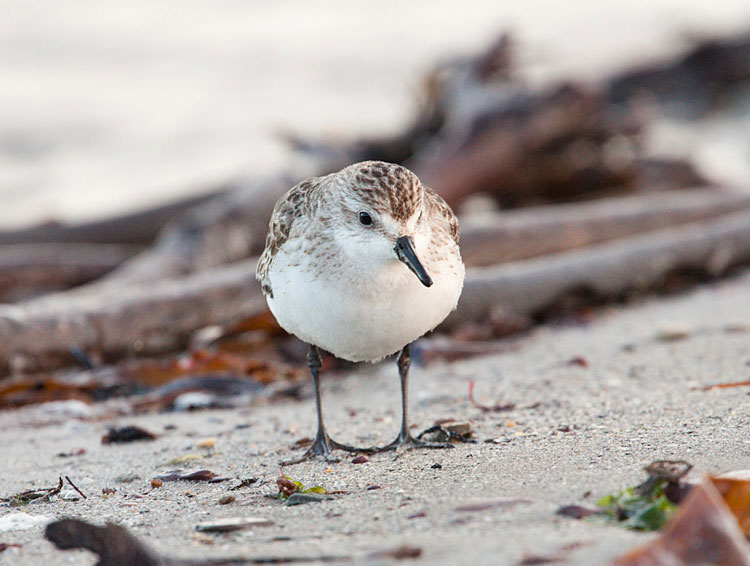
I'v dug through my files and produced a few Semi-P images - great little birds and so photogenic!


Ballycotton, Cork - November 2010

Ballycotton, Cork - November 2010 (same bird as above)

Ballycotton, September 2011
Garretstown Beach, Cork - September 2012
Ballycotton - September 2008